
Justice Is a Verb, and the Work Is Still Ours: Martin Luther King Jr. Day of Service 2026

Dr. Martin Luther King Jr. is often remembered for his soaring rhetoric and singular moments, standing at the Lincoln Memorial, leading marches across the Edmund Pettus Bridge, speaking of dreams and beloved community. But King did not understand justice as an abstract ideal or a distant promise. For him, justice was action. It was work. It was service, especially in moments of struggle.
“Everybody can be great,” King said in a 1968 sermon, “because anybody can serve.” He did not offer this as sentiment. He offered it as instruction.

King’s life was shaped by an unflinching awareness of structural inequality, economic, racial, and civic. Born in 1929 in Atlanta, Georgia, he came of age during the Great Depression and Jim Crow segregation. He understood early that dignity was not distributed equally in America, and that poverty, discrimination, and disenfranchisement were not personal failures but systemic ones. His leadership in the Civil Rights Movement, through the Montgomery Bus Boycott, the Birmingham Campaign, the March on Washington, and beyond, was grounded in a moral conviction that justice demanded collective responsibility.
That conviction extended beyond civil rights to economic justice. In the final years of his life, King focused intensely on poverty, labor rights, and access to opportunity. He supported sanitation workers in Memphis. He launched the Poor People’s Campaign to demand jobs, fair wages, and housing. He warned that America could not call itself free while millions were locked out of opportunity.
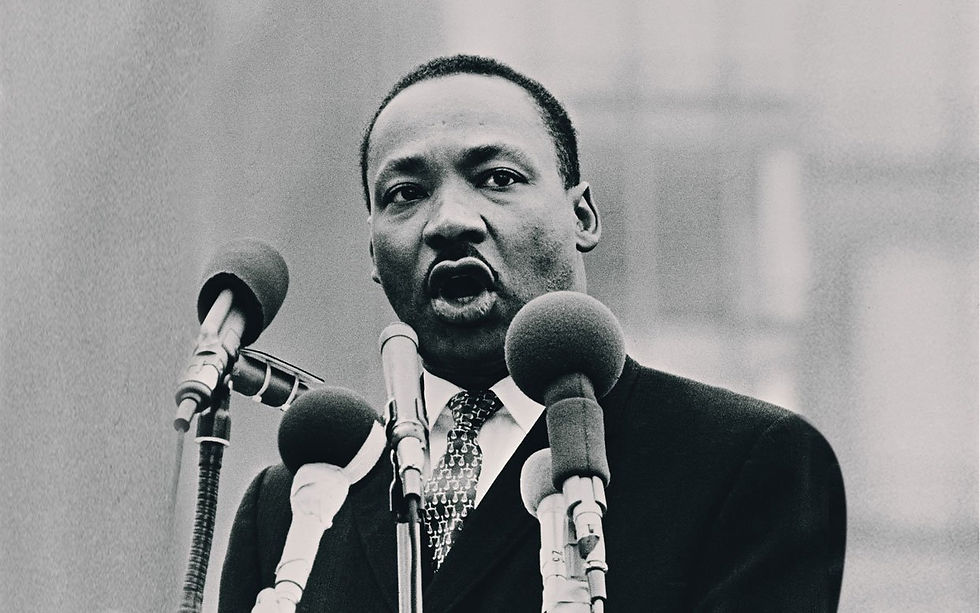
“Injustice anywhere is a threat to justice everywhere,” King wrote in his 1963 “Letter from Birmingham Jail,” reminding the nation that suffering does not exist in isolation. We are bound together, whether we acknowledge it or not.
That belief, of shared fate and shared responsibility, sits at the heart of The Urban League of Greater Philadelphia’s mission today.
For more than a century, the Urban League movement has worked to empower communities through economic opportunity, education, workforce development, housing stability, and advocacy. Here in Greater Philadelphia, the work continues across neighborhoods and generations, meeting people where they are and addressing real barriers with real solutions. The Urban League understands what King understood: that justice is not achieved by words alone, but by systems that allow people to work, earn, learn, and live with dignity.

MLK Day was designated a National Day of Service because King believed that progress is made when ordinary people choose to act, even while carrying their own needs, burdens, and struggles. He rejected the idea that service is reserved for those with abundance. Instead, he called people to show up for one another precisely because life is hard.
That message matters deeply today.
In a city where too many families are navigating unemployment, rising costs, housing instability, and unequal access to resources, the call to serve can feel complicated. How do you give when you need help yourself? How do you stand against injustice while still seeking justice for your own life?
King’s answer was never perfection. It was participation.

Service, in his vision, was mutual. It was neighbors helping neighbors. It was institutions using their power responsibly. It was communities refusing to let struggle isolate them from one another. Service did not erase need, it transformed it into solidarity.
That spirit comes to life on Monday, January 19, 2026, as The Urban League of Greater Philadelphia, in partnership with Philadelphia Parks & Recreation and community partners, hosts the Martin Luther King Jr. Day Jobs & Community Supports Fair at the MLK Recreation Center. This Day of Service is not symbolic. It is practical.
Community members will have access to job opportunities, workforce and career resources, financial education, and essential support services, all in one place. It is an invitation to move forward together. To connect people to opportunity. To turn remembrance into action.
As the nation approaches the 250th anniversary of its founding, this moment carries additional weight. America’s promise has always been aspirational, freedom and justice imagined long before they were fully realized. King understood that democracy is not static. It must be renewed, repaired, and recommitted to by each generation. The work of The Urban League of Greater Philadelphia is part of that ongoing project. It reflects a belief that the American story is still being written, and that equity, access, and dignity must be central to its next chapter.

On this MLK Day of Service, we honor Dr. King not only by remembering his words, but by continuing his work.
We show up for our neighbors. We stand for justice even as we seek it. We serve, not because we have everything, but because we are bound to one another.
Justice is not a moment. It is a practice.
And the work is still ours.

Event Information
Martin Luther King Jr. Day Jobs & Community Supports Fair
Monday, January 19, 2026 10:00 AM – 2:00 PM
MLK Recreation Center: 2101 Cecil B. Moore Avenue, Philadelphia, PA 19121
For questions or more information: careercenter@urbanleaguephila.org
Sources & References
King, Martin Luther Jr.
• “Letter from Birmingham Jail,” April 16, 1963
• “The Drum Major Instinct,” Sermon delivered February 4, 1968, Ebenezer Baptist Church
• Poor People’s Campaign, 1967–1968
• King Center Archives (thekingcenter.org)
National Day of Service
• Corporation for National and Community Service / AmeriCorps MLK Day of Service History
Urban League Movement
• National Urban League Historical Overview
• Urban League of Greater Philadelphia, Mission & History (urbanleaguephila.org)


Comments